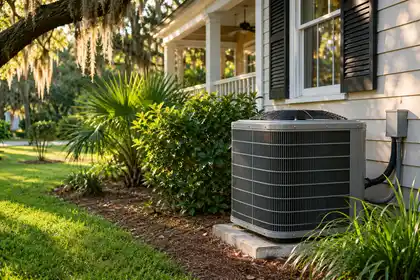
AC Repair in Brunswick, GA
Air conditioner blowing warm, dripping water or covered in ice? Call AC Repair Brunswick GA. It is free to call, and a licensed local technician can come out to your home.
Quick help
What’s going on with your AC?
Pick the closest match, or simply call and tell us what you see.
AC quit in the heat?
Free to call. A local technician can come out and get the cool air back.
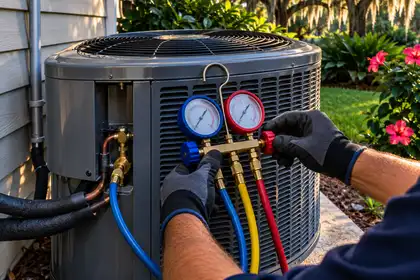 AC RepairEvery cooling problem
 Not CoolingWarm air, endless run times
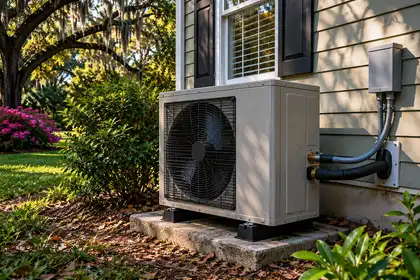 Heat PumpCooling and heating help
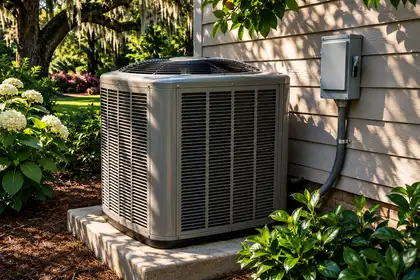 Tune Up & MaintenanceBefore the long summer
 Heating & AirThe whole system, all year
AC repair in Brunswick, GA
Air conditioning repair that starts with one phone call
When the air conditioning quits in Brunswick, it rarely picks a mild, dry week to do it. It is usually the middle of a sticky afternoon, the house is warming by the hour, and you want someone who knows these systems to look at it.
That is what this number is for. Call AC Repair Brunswick GA, tell us what the system is doing, and a licensed local technician can come out to your home. You do not need to know the name of the broken part. Most people call with a symptom: the air from the vents feels warm, the outdoor unit hums but its fan sits still, there is water on the floor by the indoor unit, or there is frost on the copper line. Describe what you see and hear, and mention anything you have already tried, like changing the filter or resetting a breaker. Those details help the technician arrive ready for the likely causes.
At the house, the technician tests the system, finds what is actually wrong and explains the repair in plain words before any work begins. You decide whether to go ahead. Simple fixes such as a failed capacitor, a burned contactor or a clogged drain line can often be handled on the first visit. Bigger problems, like a refrigerant leak or a tired compressor, come with a clear explanation of the options so you can choose what suits your home.
Calls about central air conditioners, heat pumps, air handlers, thermostats, ductwork and the drain lines and pans that come with them are all welcome, whether the equipment is twenty years old or a newer high efficiency system in the attic.

How a call works
Call and describe the problem
Tell us what the AC is doing, where the equipment is and whether anyone at home is struggling with the heat.
A local technician comes out
A licensed technician visits your Brunswick home, checks the system and tracks down the cause.
You hear the options and decide
The repair is explained before work starts. Nothing happens until you say so.
Why the coastal climate wears on air conditioners
Brunswick sits on the Georgia coast, beside the marshes, with hot and humid summers and a cooling season that starts in spring and runs well into fall. That combination is hard on equipment in a few specific ways, and knowing them helps you spot trouble early.
Long seasons, long run times
Many systems here run for months with few real breaks. Every hour adds wear to the capacitor, the contactor, the fan motors and the compressor. Parts that might last for years in a milder place tend to fail on the hottest days, when the system is working hardest.
Humidity and the drain line
An air conditioner pulls a surprising amount of water out of humid air. That water runs through a drain line, and in a warm, damp line algae and sludge grow quickly. A clogged line can back up into the pan, trip a safety switch that shuts the cooling off, or overflow into a ceiling below an attic unit.
Salt air on the outdoor coil
Moist, salty air settles on outdoor units, especially in homes close to the water and the marsh. Over time it corrodes the thin aluminum fins and the copper tubing of the condenser coil. A corroded or dirty coil cannot shed heat well, so the system runs longer and cools less. A gentle rinse with fresh water helps between visits.
Storm season
Summer thunderstorms and the Atlantic hurricane season bring power flickers, surges, flooding and blown debris. Surges can damage capacitors and control boards, and an outdoor unit that sat in floodwater should not be switched back on until a technician has checked it.
Heat pumps that rarely rest
Because winters are mild, many Brunswick homes heat with a heat pump. The same outdoor unit that cools all summer heats through the winter, so it never really gets an off season. That makes the yearly checkup more important, not less.
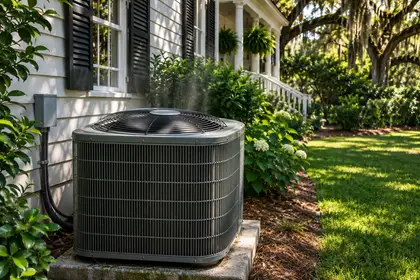
Common air conditioning problems in Brunswick homes
Most calls start with one of the symptoms below. Each page explains the usual causes, what you can safely check yourself, and when to stop and call for AC repair. If you are not sure which one fits, call and describe it.
- AC Not CoolingThe system hums along all afternoon and the rooms stay warm and sticky.
- Heat Pump RepairLukewarm air in winter, weak cooling in summer, or an outdoor unit that ices solid.
- AC Tune Up & MaintenanceCoils cleaned, drains cleared and electrical parts tested before the long hot stretch.
- Refrigerant Leak RepairHissing, oily residue at a fitting, or a system that needs refrigerant year after year.
- Frozen AC CoilFrost on the big copper line, ice on the indoor coil, and barely any air at the vents.
- AC Leaking WaterWater around the indoor unit, a clogged drain line, or a stain spreading on the ceiling.
- Thermostat RepairA blank display, a system that ignores the setting, or a new thermostat that will not work.
- AC Emergency StepsWhat to do right now when the system dies in a heat wave or water reaches the equipment.
- Heating & AirHeat pumps, air handlers, backup heat and ductwork for the cooler months.
Quick checks before you call
These take a few minutes, need no tools and sometimes solve the problem outright. If anything looks unsafe, skip it and call.
| Check | What to look for | What it tells you |
|---|---|---|
| Thermostat | Set to Cool, the setting a few degrees below room temperature, fan on Auto, fresh batteries if it uses them. | A blank screen or the wrong mode is the easiest fix of all. |
| Breakers | A tripped breaker for the indoor unit or the outdoor unit. Reset it once. | If it trips a second time, leave it off and call. Something is drawing too much power. |
| Air filter | Hold it up to the light. If you cannot see through it, replace it. | A clogged filter starves the indoor coil of air and can make it freeze. |
| Outdoor unit | Is the fan on top spinning? Is the coil clear of leaves, grass clippings and vines? | A humming unit with a still fan often points to a capacitor or fan motor. |
| Indoor unit | Water in the pan or on the floor, or ice on the larger copper line. | Water or ice means switch the cooling off and call. Running it makes things worse. |
| Vents and returns | Supply vents open, return grilles not blocked by furniture or rugs. | Closed or blocked vents cut airflow and stress the system. |
If those checks do not bring cool air back within an hour or so, it is time for a technician. Note what you tried, because it saves time on the visit.
Repair or replace? How to think it through
Most AC problems in Brunswick end with a repair, not a new system. Capacitors, contactors, fan motors, drain problems and thermostat faults are routine fixes on equipment of almost any age. Replacement only comes up when the heart of the system, the compressor or the coils, is failing, or when the same system keeps breaking down.
When that question does come up, a few things usually decide it:
- Age. A system in its first decade is usually worth repairing. One that has served well past fifteen summers on the coast deserves a closer look.
- Refrigerant type. Systems built for R22 use a refrigerant that is no longer produced, so a major leak on one of them is a bigger decision.
- Repeat failures. One repair is normal. A string of breakdowns in a single season is a pattern worth talking through.
- Comfort. If rooms never cool evenly and the house always feels damp, the system may be the wrong size or the ductwork may be the real problem.
- Coil condition. Heavy corrosion from salt air on the outdoor coil, or a leaking indoor coil, changes the picture.
The technician who looks at your system can walk you through what they found, what a repair would involve and how much life the equipment likely has left. The choice is always yours, and there is no pressure either way.
Heating and air help for the cooler months
Brunswick winters are short and mild, but cold snaps still arrive, and that is when a heat pump or furnace problem shows up. Many homes here use a heat pump with electric backup heat in the air handler, so the same equipment that keeps you cool in July keeps the house warm on a frosty January morning.
Common winter calls include a heat pump blowing lukewarm air, an outdoor unit that stays covered in ice, backup heat that runs constantly, and thermostats that will not switch between heating and cooling. The heating and air page covers the whole system, and the heat pump repair and thermostat repair pages go into detail.
A little steam rising from a heat pump in winter, along with a short pause in heating, is usually its normal defrost cycle. A unit that stays frozen solid for hours is not normal, and it is worth a call.
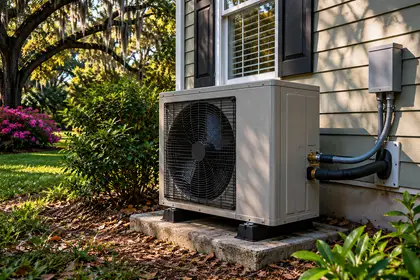
When an AC problem cannot wait
Some problems are fine until tomorrow. Others are not. Here is how to tell the difference.
Call now
- The house is hot and someone at home is elderly, very young, pregnant or has a health condition made worse by heat.
- A burning or electrical smell from a vent or the outdoor unit. Turn the system off. If you see smoke or fire, leave and call 911.
- Water dripping through a ceiling or pooling near the air handler’s wiring.
- The outdoor unit hums or buzzes but its fan will not turn.
- A breaker that trips again right after you reset it.
Can usually wait a day
- The system still cools, just not as well as it did last week.
- A new noise that is mild and steady, with the house still comfortable.
- The thermostat acts oddly but the temperature stays reasonable.
- You would like the system looked at before the next heat wave.
For the urgent cases, the AC emergency steps page explains what to do while you wait: keeping people cool, handling water near equipment and staying safe in a storm.
Keeping your AC healthy between visits
A few small habits go a long way in a climate like this one. None of them replace a yearly checkup, but they reduce the odds of a breakdown on the worst day of the summer.
- Check the air filter every month from spring through fall and replace it when it looks gray.
- Keep about two feet clear around the outdoor unit. Trim shrubs, pull vines and keep grass clippings away from the coil.
- Rinse the outdoor coil gently with a garden hose a few times a season, from the inside out if you can reach. Never use a pressure washer.
- If your drain line has an access port, pour a cup of plain white vinegar into it every few months to slow algae growth.
- Keep fire ants and other nests away from the outdoor unit. Ants can pack into electrical parts and stop the unit cold.
- Pay attention to new sounds, smells and longer run times, and call while the problem is still small.
A professional AC tune up in spring covers what you cannot do yourself: testing capacitors and contactors, measuring refrigerant pressures and temperatures, cleaning the coils properly and clearing the drain from end to end.
AC repair questions from Brunswick homeowners
How soon can someone look at my air conditioner?
Timing depends on the day and the season. During a long hot spell many Brunswick homes need help at the same time, so calling early in the day is the best thing you can do. When you call, tell us whether anyone in the house is elderly, very young, pregnant or unwell, because that matters when the house is getting hot.
Is it really free to call?
Yes. Calling is free and there is no obligation. You describe the problem, and if you want a technician to come out, one can. Any repair is explained to you before work starts, and you decide whether to go ahead.
Do you help with heat pumps as well as central air?
Yes. Heat pumps are common in Brunswick because the winters are mild, and the same outdoor unit cools in summer and heats in winter. Calls about weak heat, an outdoor unit covered in ice, or backup heat that never shuts off are all welcome. See heat pump repair for more.
Should I keep running the AC if it is blowing warm air?
Usually not. If you see ice on the copper lines, hear the outdoor unit humming while its fan sits still, or smell anything burning, switch the thermostat to Off. Running a system in that state can turn a small repair into a big one, especially for the compressor.
My system is old and uses R22. Can it still be repaired?
Often, yes. R22 is no longer produced, so a technician will look closely at why the system lost refrigerant before adding any. Electrical parts, fan motors, drains and thermostats on older systems can be repaired like any other. If the problem is a large leak or a worn out compressor, the technician will explain the choices so you can decide.
Why does my AC run almost all day in the summer?
On a long, humid Brunswick afternoon a correctly sized system can run for long stretches, and that alone is not a fault. It is worth a call if the house never reaches the setting by evening, the air feels damp and sticky, or the run times have grown compared with last summer.
Do I need to be home for the visit?
Yes, an adult should be there to let the technician in, show where the indoor unit is (attic, closet, garage or crawlspace) and hear what was found. Clear a path to the indoor unit and the outdoor unit before they arrive if you can.
What should I have ready when I call?
A short description of what the system is doing, anything you have already tried, where the indoor unit is, and roughly how old the system is if you know. If the thermostat or the indoor unit shows a blinking light or a code, mention that too.
Still not sure what is wrong? Call (555) 010-0199 and tell us what the system is doing. More answers are on the FAQ page.
Serving homes across Brunswick, Georgia
AC Repair Brunswick GA takes calls from homes all over Brunswick, the county seat of Glynn County. That covers the older houses near downtown and Old Town, where central air was often added long after the house was built and ductwork runs through tight attics and crawlspaces, as well as newer homes with high efficiency heat pumps and attic air handlers.
Whatever the house, the goal is the same: find out why the air conditioning stopped doing its job and fix it properly, so you are not calling again two weeks later. If you live in Brunswick ZIP codes 31520, 31523 or 31525 and your AC is acting up, call and tell us what is happening.