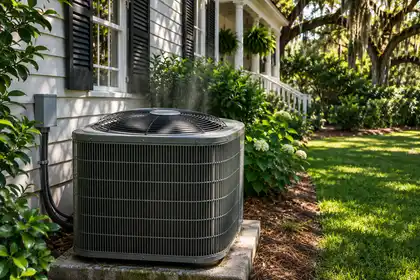
AC Not Cooling in Brunswick, GA
The system runs all afternoon and the house stays warm and sticky. Call AC Repair Brunswick GA and a licensed local technician can find out why.
The short answer
When an air conditioner runs but does not cool, the cause is almost always one of three things: airflow (a clogged filter, blocked vents or a dirty coil), refrigerant (a leak that has left the system low), or an electrical part such as a capacitor or contactor that keeps the compressor from running.
Check the thermostat, the filter and the breakers first. If the outdoor fan is not spinning, the copper line is iced, or nothing changes within an hour, switch the system off and call. An AC not cooling in Brunswick in July is not something to wait out for days.
Most homeowners with an AC not cooling in Brunswick notice the problem in the late afternoon: the thermostat says 78 and climbing, the vents feel cool but not cold, and the house never catches up. The sections below explain what is usually going on and what a technician will look at.
What this repair covers
A call about an AC that will not cool can trace back to any part of the system. These are the repairs that come up most often.
- Run and start capacitors that have weakened or bulged
- Contactors with pitted or burned contact points
- Outdoor fan motors that hum, overheat or will not start
- Refrigerant leak searches and repairs
- Dirty or salt corroded condenser coils
- Frozen indoor coils and the airflow problems behind them
- Indoor blower motors and blower capacitors
- Compressors that trip off on overload
- Thermostat settings, wiring and placement
- Disconnected or crushed ducts in the attic or crawlspace
Signs your AC is not cooling the way it should
Sometimes the problem is obvious: the vents blow room temperature air. More often it creeps up over a few days. Watch for these:
- The thermostat setting is never reached, even late at night.
- Air from the vents feels cool rather than cold.
- The system runs without stopping through the afternoon and evening.
- Rooms feel damp, windows fog on the outside in the morning, or a musty smell lingers.
- The outdoor unit hums or clicks, but the fan on top is not turning.
- Frost or ice on the larger copper line, at the outdoor unit or near the indoor coil.
- One end of the house is fine and the other is not.
The last sign matters. If only some rooms are warm, the equipment may be working and the air is not reaching them because of a crushed duct, a disconnected run in the attic or a closed damper. If the whole house is warm, it is more likely the equipment itself. Mention which one you are seeing when you call.
Why an AC runs but does not cool
| What you notice | Most likely cause | What helps |
|---|---|---|
| Outdoor fan spins, indoor air only a little cool | Low refrigerant from a leak, or the compressor is not running | Turn it off and call. Do not keep it running. |
| Outdoor unit hums, fan does not turn | Failed capacitor or seized fan motor | Switch off at the thermostat. A technician tests and replaces the part. |
| Nothing runs outside at all | Tripped breaker, failed contactor, blown fuse in the disconnect, thermostat wiring | Check the breaker once. If it trips again, call. |
| Ice on the copper lines | Airflow restriction or low refrigerant | Set to Off with the fan On to thaw, change the filter, then call. |
| Weak airflow from every vent | Clogged filter, dirty indoor coil, blower problem | Replace the filter. Call if airflow stays weak. |
| Cool but sticky and damp | Fan set to On, low refrigerant, oversized system | Set the fan to Auto. Call if it stays clammy. |
A word about capacitors
The capacitor is a small cylinder in the outdoor unit that gives the compressor and fan motor the electrical push they need to start and keep running. Long run times, heat and power surges from summer storms all wear capacitors down, and a weak one is one of the most common reasons an AC stops cooling on a hot Brunswick afternoon. The classic sign is a unit that hums without the fan turning.
Please leave it to a technician. A capacitor can store enough electricity to cause a serious injury even with the power switched off, and replacing it properly means testing it and matching the exact rating.
Call today, or can it wait until tomorrow?
Call today
- The house is climbing past the mid 80s and someone at home is elderly, very young, pregnant or unwell.
- The outdoor unit hums, buzzes or clicks without starting.
- The copper lines are iced over.
- A burning smell from the vents or the outdoor unit. Switch the system off first.
Usually fine until tomorrow
- The house is warmer than you like but still under control.
- The system cools, just more slowly than last summer.
- You changed a clogged filter and want to see whether that fixed it.
While you wait, close blinds on the sunny side of the house, run ceiling fans, and avoid the oven and dryer during the hottest part of the day. If the heat is affecting anyone’s health, see the AC emergency steps.
What the technician checks on the visit
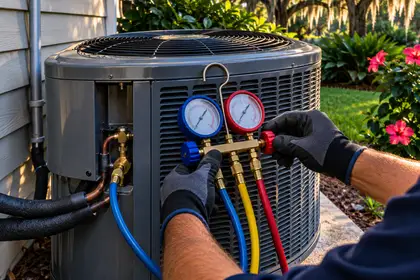
A good diagnosis follows the heat. The technician measures the temperature of the air going into the return and coming out of the vents, then checks refrigerant pressures and line temperatures at the outdoor unit. Those readings show whether the system is low on refrigerant, starved for airflow or not running the compressor at all.
From there they test the capacitor and contactor, listen to the compressor and fan motors, look at the outdoor coil for dirt and corrosion, and open the indoor unit to check the filter, the evaporator coil, the blower and the drain. On homes with the air handler in the attic, they also look at the duct connections around it.
Before any repair, you get a plain explanation of what failed and why. That second part matters: a capacitor that failed because of a dirty coil will fail again unless the coil gets cleaned too.
How to keep it from happening again
- Change the filter every month through the cooling season, more often with pets or ongoing construction next door.
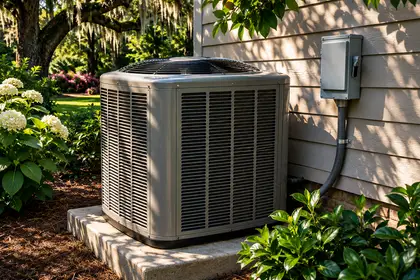
- Keep the outdoor coil clean and the area around it clear. Salt air and pollen build up faster here than people expect.
- Leave the thermostat fan on Auto so the coil can dry and the system can pull moisture out of the house.
- Book a spring AC tune up so weak capacitors and slow leaks are caught before the first heat wave.
Questions about an AC that will not cool
How much colder should the air from my vents be?
A healthy system usually delivers air roughly 15 to 20 degrees cooler than the air going into the return grille. Hold a kitchen thermometer in a supply vent for a few minutes, then at the return. A much smaller difference means the system is not removing enough heat, which points to refrigerant, coil or airflow trouble.
The outdoor fan is running. Does that mean the compressor is fine?
Not necessarily. The fan and the compressor are separate. The fan can spin while the compressor sits idle because of a weak capacitor, a failing contactor or an overheated compressor that shut itself off. If the fan runs but the air inside is not cool, that is exactly the pattern a technician needs to hear about.
Can low refrigerant just be topped off?
Refrigerant is not used up like fuel. If the level is low, it leaked somewhere. Adding refrigerant without finding the leak means the system will be low again, sometimes within weeks. A technician measures the level, looks for the leak and explains the options. Our refrigerant leak repair page covers this in more detail.
Why does the house feel clammy even though the AC runs?
Air conditioners remove moisture as well as heat. If the coil is not cold enough, or the fan is set to On instead of Auto, water that collects on the coil gets blown back into the house. Set the fan to Auto first. If the air still feels damp, the system may be low on refrigerant or oversized for the house.
It cools fine in the morning but not by late afternoon. Why?
Late afternoon is when the house has soaked up the most heat and the outdoor unit is working against the hottest air of the day. A system with a dirty condenser coil, a slow refrigerant leak or a weak capacitor often keeps up in the morning and falls behind after lunch. That pattern is worth a call before it gets worse.
Related services
- Refrigerant Leak RepairHissing, oily residue at a fitting, or a system that needs refrigerant year after year.
- Frozen AC CoilFrost on the big copper line, ice on the indoor coil, and barely any air at the vents.
- Thermostat RepairA blank display, a system that ignores the setting, or a new thermostat that will not work.
Help with an AC not cooling in Brunswick
From the older homes near downtown, where ductwork was squeezed into tight attics long after the houses were built, to newer homes with high efficiency equipment, the same few causes come up again and again with an AC not cooling in Brunswick. Call, tell us what you are seeing, and a licensed local technician can come out and track it down.