Emergency AC Repair in Brunswick, GA: What to Do First
The AC quit, the house is heating up, and maybe there is water on the floor. Keep people safe, switch the system off if needed, and call.
The first three steps
Take care of people first
If the house is hot, move anyone elderly, very young, pregnant or unwell to the coolest room, and give them water. Watch for the warning signs of heat illness below.
Switch the system off if it is not safe
Ice, water near the equipment, a burning smell or a humming outdoor unit with a still fan all mean Off at the thermostat. For water near wiring, turn off the breaker too if you can reach it safely.
Call and say it is urgent
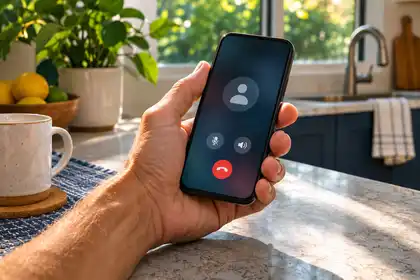
Call AC Repair Brunswick GA, explain what is happening and who is at home. A licensed local technician can come out.
When the heat puts people at risk
In a Brunswick summer, a house without air conditioning can become dangerous within hours, especially for older adults, babies and young children, pregnant women and anyone with heart, lung or kidney conditions. While you wait for emergency AC repair, keep the house and the people in it as cool as you can:
- Close blinds and curtains on the sunny side of the house.
- Move to the lowest, shadiest room. Run ceiling fans counterclockwise.
- Drink water regularly, even before feeling thirsty. Skip alcohol and very sugary drinks.
- Take cool showers or use damp cloths on the neck, wrists and forehead.
- Avoid using the oven, the dryer and other heat producing appliances.
- If the house keeps getting hotter, go somewhere air conditioned for a few hours.
Warning signs of heat illness
| What you notice | What it may be | What to do |
|---|---|---|
| Heavy sweating, cool and clammy skin, dizziness, headache, nausea, weakness | Heat exhaustion | Move to a cooler place, loosen clothing, sip water, use cool cloths. Get medical help if symptoms get worse or last more than an hour. |
| Very high body temperature, hot red skin, confusion, fainting, a fast strong pulse | Heat stroke, a medical emergency | Call 911 right away. Move the person somewhere cooler and cool them with wet cloths while you wait. |
The National Weather Service keeps practical heat safety advice worth reading before the summer starts.
Water near the equipment
Water and electricity do not mix, and an indoor unit sits right next to both. If you find water on the floor around the air handler, dripping through a ceiling or pooling in an attic pan:
- Switch the AC off at the thermostat.
- If water is near wiring or the unit’s electrical panel, turn off the breaker for the indoor unit, but only if you can reach the panel without standing in water.
- Put down towels, place a bucket under drips, and move belongings out of the way.
- If a ceiling is sagging with water, keep people out from underneath it.
- Call. Most leaks come from a clogged drain line or a thawing frozen coil, and both need the cause fixed. See AC leaking water and frozen AC coil.
Burning smells, sparks and humming
A brief dusty smell the first time the heat runs each year is normal. A burning plastic or electrical smell, smoke from a vent, sparks at the outdoor unit or a loud electrical buzz are not. Switch the system off at the thermostat and, if you can do so safely, at the breaker. If there is smoke or fire, get everyone out and call 911.
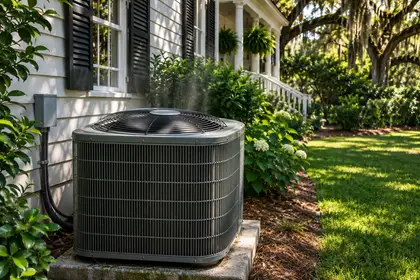
An outdoor unit that hums or buzzes without its fan turning usually has a failed capacitor or a stuck motor. Leaving it on can overheat the compressor, so switch it off and call. Please do not open the unit yourself: capacitors can hold a dangerous amount of electricity even with the power off.
Before and after a storm
Hurricane season runs through summer and fall, and even ordinary thunderstorms on the Georgia coast bring power flickers and surges. A few steps protect the system:
Before the storm
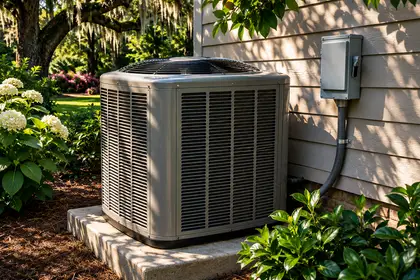
- Secure or bring in loose items near the outdoor unit: chairs, planters, grills.
- If a major storm is coming, switch the AC off at the thermostat and at the breaker before the power goes out.
- Know where the breaker for the indoor and outdoor units is in your panel.
After the storm
- If the outdoor unit or the indoor unit sat in floodwater, leave it off and have it checked before use.
- Clear branches, leaves and debris from around and on top of the outdoor unit.
- Look for bent fins, a dented cabinet or loose refrigerant lines.
- Once power is stable, turn the breaker on, wait a few minutes, then start the system from the thermostat.
Ready.gov has a full hurricane preparation guide for the household as a whole.
What to tell us when you call
- What the system is doing: no cooling, water, ice, noise, smell or nothing at all.
- How warm the house is and whether anyone at home is at risk from the heat.
- Where the indoor unit is: attic, closet, garage or crawlspace.
- What you have already tried, such as changing the filter or resetting a breaker.
- Whether the problem started after a storm or a power outage.
Those details help the technician arrive prepared, which matters most for emergency AC repair in Brunswick, when the house is heating up by the hour.
AC emergency questions
What counts as an AC emergency?
A dead AC during a heat wave with someone vulnerable at home, water coming through a ceiling or reaching electrical parts, a burning smell or smoke, or an outdoor unit that sat in floodwater. Anything that puts people or the house at risk counts. When in doubt, call and describe it.
Should I turn the AC off or leave it running?
Turn it off if there is ice on the lines, water around the indoor unit, a burning smell, or an outdoor unit that hums without its fan turning. Running it in those conditions can make the damage worse. If it simply is not cooling and none of those signs are present, switch it off anyway while you wait, and leave the fan on Auto.
Is a fan enough to keep someone safe in the heat?
Fans help with comfort, but when indoor temperatures get very high a fan alone may not prevent heat illness. Move anyone at risk to the coolest room or to an air conditioned place such as a friend’s home, a library or a store, and use cool showers or damp cloths.
Can I run the AC after a hurricane or flood?
Not if the outdoor unit or the indoor unit sat in water. Floodwater can damage the electrical parts and controls, and switching it back on can cause further harm. Leave the breaker off and have a technician check it first. If the unit stayed dry, clear away debris and check that the breaker is on before starting it.
Problems that often turn urgent
Emergency AC repair in Brunswick
The worst AC failures in Brunswick tend to arrive in the same weeks: the first heat wave of the year, the stickiest days of August, and right after storms. If your AC dies when it matters most, follow the steps above and call. A licensed local technician can come out for emergency AC repair in Brunswick.